 Tracy Fiers
Email:
Phone: 972-346-3612

Celina Travel
We're here to take you places
Dana Thomson
Email:
Phone: 972-346-3612
Tracy Fiers
Email:
Phone: 972-346-3612

Dana Thomson
Email:
Phone: 972-346-3612


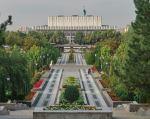
Tashkent, the capital of Uzbekistan, lies at the crossroads of Central Asia and has long been a hub of culture, trade, and political life. Its history stretches back over two millennia, shaped by Persian, Mongol, and Russian influences. The city was a key stop along the Silk Road, and traces of this vibrant past are still visible in its madrasahs, mosques, and historic squares, which blend seamlessly with Soviet-era architecture and modern urban development.
The city is set on a flat plain near the foothills of the Tien Shan mountains, with a mix of tree-lined boulevards, parks, and open spaces punctuating the urban environment. Notable sites include the Khast Imam Complex, housing some of the oldest Quran manuscripts, and the Chorsu Bazaar, a bustling center of local trade where spices, textiles, and produce create a vivid sensory experience. Tashkent also offers cultural institutions such as theaters, museums, and contemporary art galleries that reflect both local tradition and modern creativity.
Tashkent’s atmosphere is a unique blend of history and modernity. The city feels expansive yet approachable, with a rhythm defined by its markets, public squares, and vibrant street life.

Email:
Phone: 972-346-3612

Email:
Phone: 972-346-3612